

Though dot-based art feels at home in modern mindfulness and wellness spaces, its roots stretch back tens of thousands of years and span multiple continents. Understanding this history situates the practice within a much larger human tradition of using repetitive mark-making as both artistic expression and meaningful ritual.
Aboriginal Australian Dot Painting
The most historically significant tradition of dot art comes from Aboriginal Australia, where dot painting has been practiced for an estimated 30,000–60,000 years, making it one of the oldest continuous art forms in human history. Traditionally, dots were used to obscure sacred or ceremonial information encoded in artworks—patterns that told Dreamtime stories, mapped water sources, or marked significant land features—so that the deeper meaning would only be understood by initiated members of the community. Ochre, charcoal, and other natural pigments were applied with sticks in careful, layered dots. This tradition remains vibrant today, with contemporary Aboriginal artists continuing to create dot paintings that carry cultural, spiritual, and personal significance. It’s worth noting that this tradition is sacred and specific to Aboriginal culture, distinct from decorative dot art practiced elsewhere—a distinction worth honoring and acknowledging in any broader exploration of the medium.
Pointillism and Western Fine Art
In the late 1880s, French artist Georges Seurat developed Pointillism, a technique in which small, distinct dots of pure color were applied in patterns to form an image. Rather than mixing paint on a palette, Seurat relied on the viewer’s eye to blend the colors optically from a distance—a scientific approach influenced by emerging color theory of the time. His most famous work, A Sunday Afternoon on the Island of La Grande Jatte (1884–1886), remains a landmark example. Fellow artist Paul Signac further developed the technique, and the movement (sometimes called Divisionism or Neo-Impressionism) influenced later movements including Fauvism and even early abstract art.
Rangoli and South Asian Traditions
In India, Rangoli—colorful patterns created on floors or ground surfaces—often begins with a foundational grid of dots (called pulli or chukkalu in some regional variations) that guides the artist in creating symmetrical, intricate designs. Traditionally made during festivals like Diwali using colored rice, sand, flower petals, or powder, Rangoli is believed to bring good fortune and welcome deities into the home. The dot grid serves a practical and almost meditative function, requiring the artist to plan spacing and symmetry before the more elaborate linework is added.
Native American and Other Indigenous Traditions
Various Native American art forms, including certain sandpainting traditions and beadwork, incorporate dot-like, repetitive point-based patterns, often carrying ceremonial or storytelling significance. Similarly, African textile and body art traditions across many cultures have long used dot patterns for both decorative and symbolic purposes.
Mandala Traditions
Though not exclusively dot-based, Tibetan Buddhist sand mandalas and Hindu mandala art often incorporate dot work in their construction, particularly in the foundational stages. The creation of these intricate, symmetrical designs—sometimes taking days or weeks—has always carried spiritual and meditative weight, with monks entering meditative states during the painstaking process of laying down each grain or mark.
Mehndi (Henna) and Body Art
In South Asian and Middle Eastern traditions, Mehndi designs applied to skin often incorporate dot patterns as both standalone decorative elements and structural guides for more complex linework, typically applied during celebratory or ceremonial occasions.
Modern Revival: Dot Art as Wellness Practice
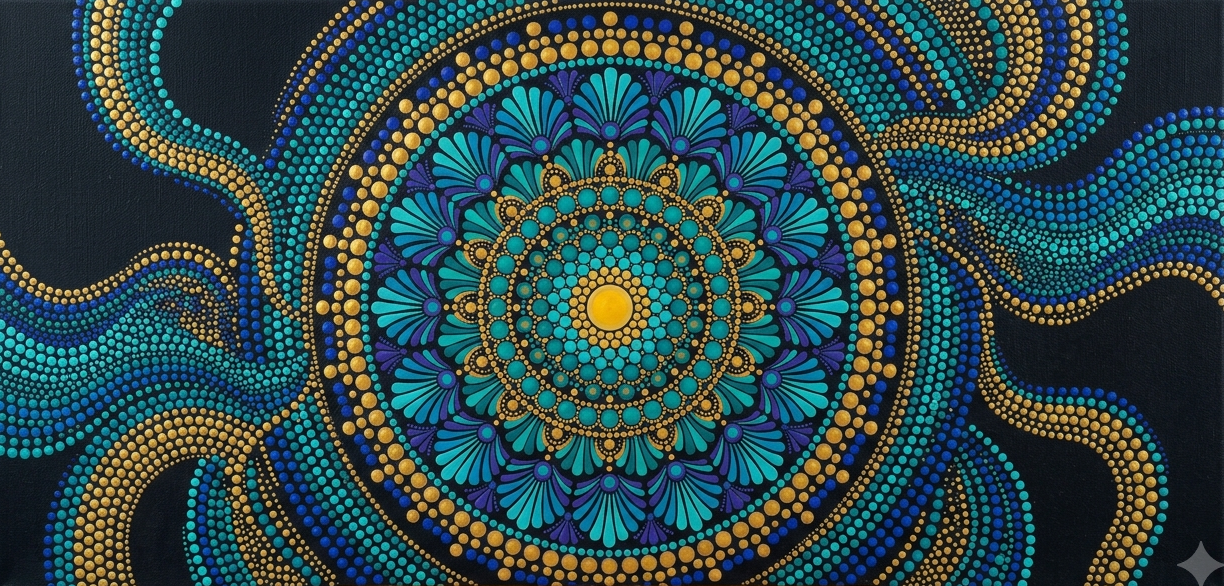
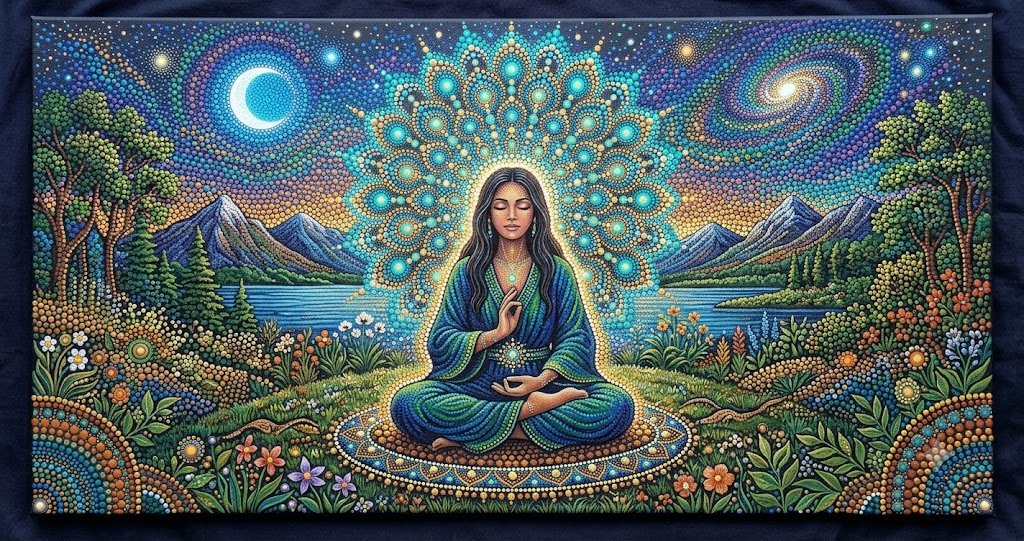
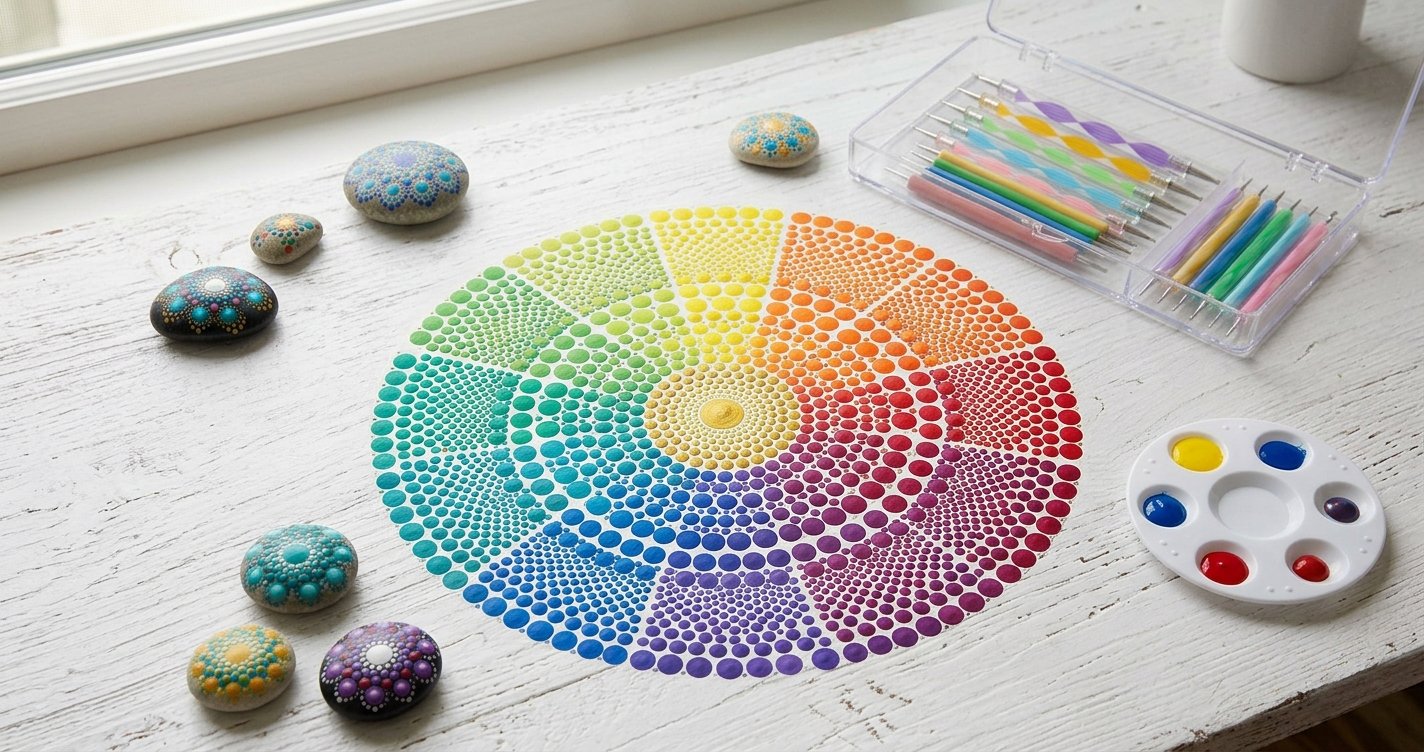
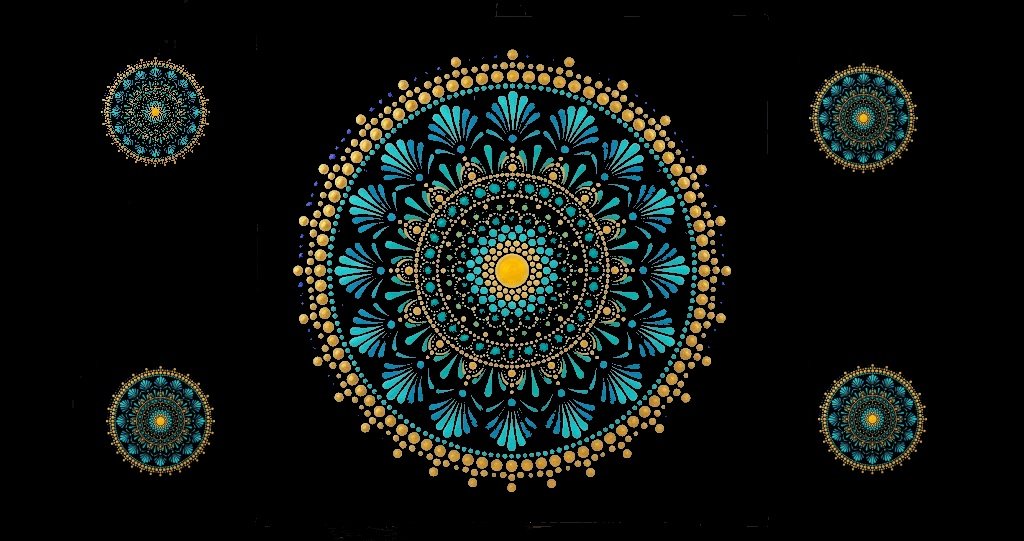
In recent decades, dot art has experienced a resurgence—partly through the popularity of “dot mandala” painting on rocks and canvases (often associated with Australian and international wellness communities), and partly through the broader adult coloring book and mindful art movement that gained momentum in the 2010s. Social media platforms have played a significant role in popularizing dot mandala art specifically, with tutorials and finished pieces widely shared, often explicitly framed around relaxation, stress relief, and meditative benefits.
RELATED POSTS
View all