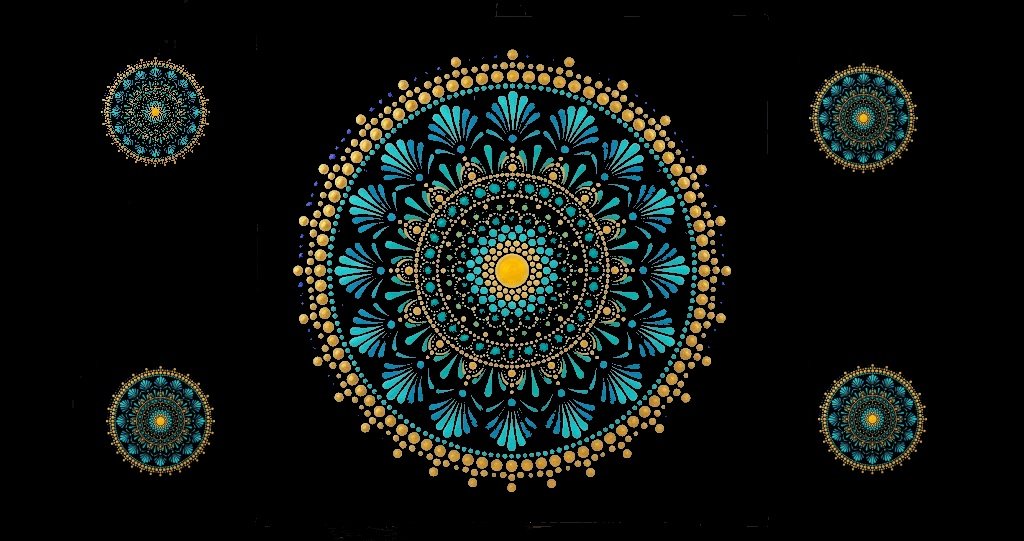


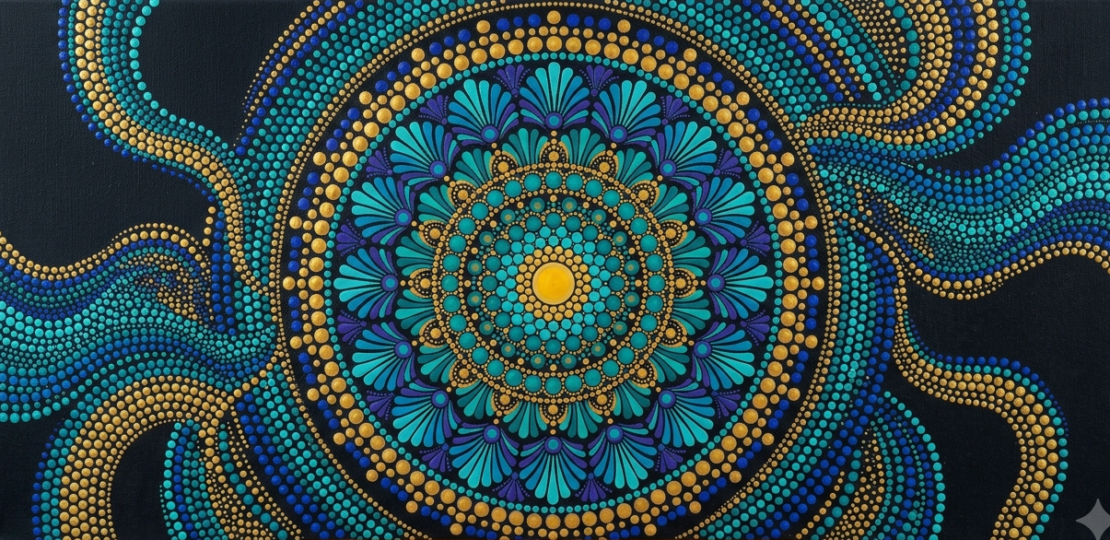
The intersection of art and mindfulness serves as the conceptual foundation for using creative expression as a meditative practice. Long before mindfulness entered the modern lexicon, human cultures utilized repetitive mark-making—from Tibetan sand mandalas to Islamic geometric patterns—to quiet the mind and foster presence. Modern psychology reinforces this connection through Mihaly Csikszentmihalyi’s concept of “flow,” a state of deep absorption characterized by a quieted inner critic, effortless focus, and a fading sense of time. Dot art is uniquely suited to cultivate this flow state because it strikes an ideal balance between challenge and skill: it is simple enough for anyone to begin immediately, yet versatile enough to offer endless complexity. However, not all art-making is inherently mindful. Projects driven by performance anxiety or outcome-based pressure lack the non-judgmental presence central to mindfulness. The key lies in engaging with art through a slow, process-oriented lens that prioritizes the journey over the final product.
Several distinct qualities make dot art an exceptional bridge between creative work and mindfulness. First, its low technical barrier removes performance anxiety, allowing immediate immersion without the fear of artistic failure. Second, the constant repetition of placing points creates a rhythmic cadence similar to mantra repetition or walking meditation. Third, because dots cannot be rushed, the medium possesses a built-in pacing that forces the practitioner to slow down, treating every point as a discrete decision. It is also an remarkably forgiving practice where misplaced dots rarely ruin a composition, directly encouraging non-judgmental acceptance. Finally, each dot offers an immediate visual feedback loop, continually anchoring attention in the present moment. This approach builds upon the foundations of art therapy, which leverages non-verbal creative expression to reduce stress and process emotion. By learning these principles, readers can use the creative process itself as an accessible, self-directed gateway to a more present relationship with their daily lives.
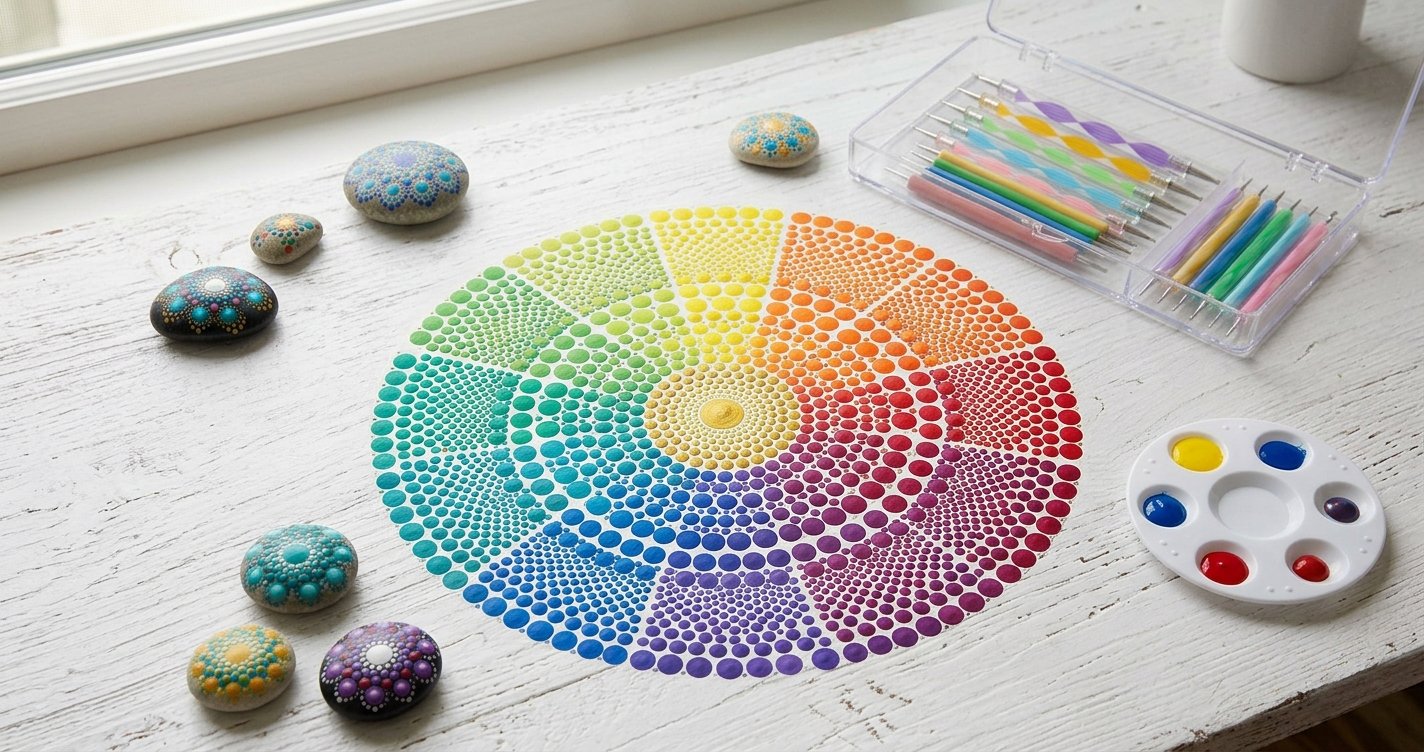
Transitioning from theory to hands-on application requires an understanding of basic tools and techniques. One of dot art’s primary advantages is its minimal equipment requirements. A standard setup features purpose-made ball-tipped stylus tools in graduated sizes, fine-liner markers, acrylic paint, and various surfaces such as canvas, smoothed rocks, wood slices, or paper. Beginners can even start with everyday household substitutes like cotton swabs, pencil erasers, toothpicks, or the ends of paintbrush handles. Acrylic paint is especially popular for surface work due to its vibrant color, quick drying time, and ability to hold a distinct, rounded dome shape.
Mastering the foundational mechanics of dot art centers on control, angle, and rhythm. To apply dots effectively, the tool is dipped into the paint to load enough medium for three to five applications before needing a reload. Holding the instrument perpendicular to the surface and applying light, uniform pressure produces clean, rounded dots without smudging. Developing a steady, rhythmic cadence of applying dots and reloading the tool creates the meditative rhythm central to the practice. Beginners can build muscle memory and control by practicing four fundamental exercises: straight lines to establish spatial control, graduated lines where dot sizes progressively shrink or grow, concentric circular rings that form the backbone of mandala designs, and color blending through dense dot placement.
RELATED POSTS
View all