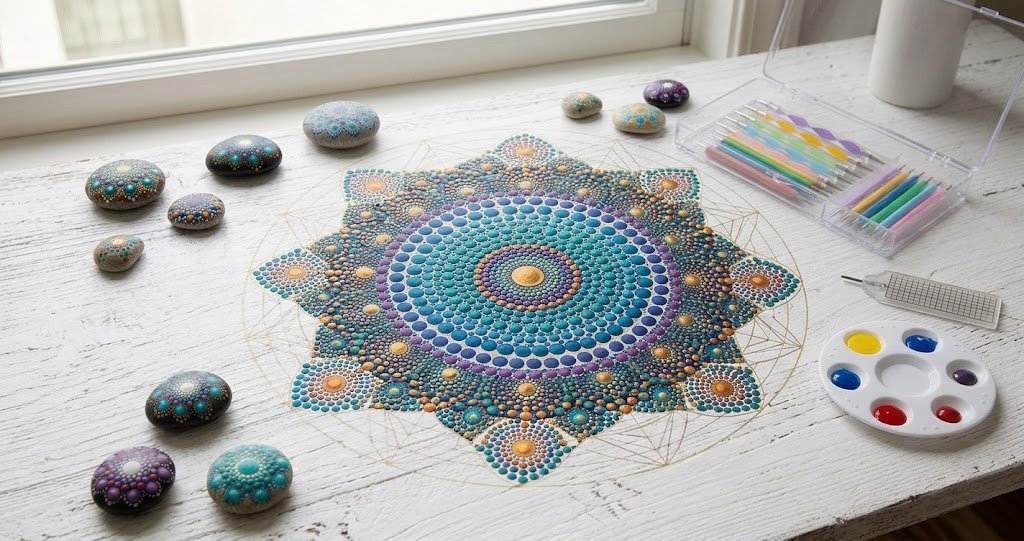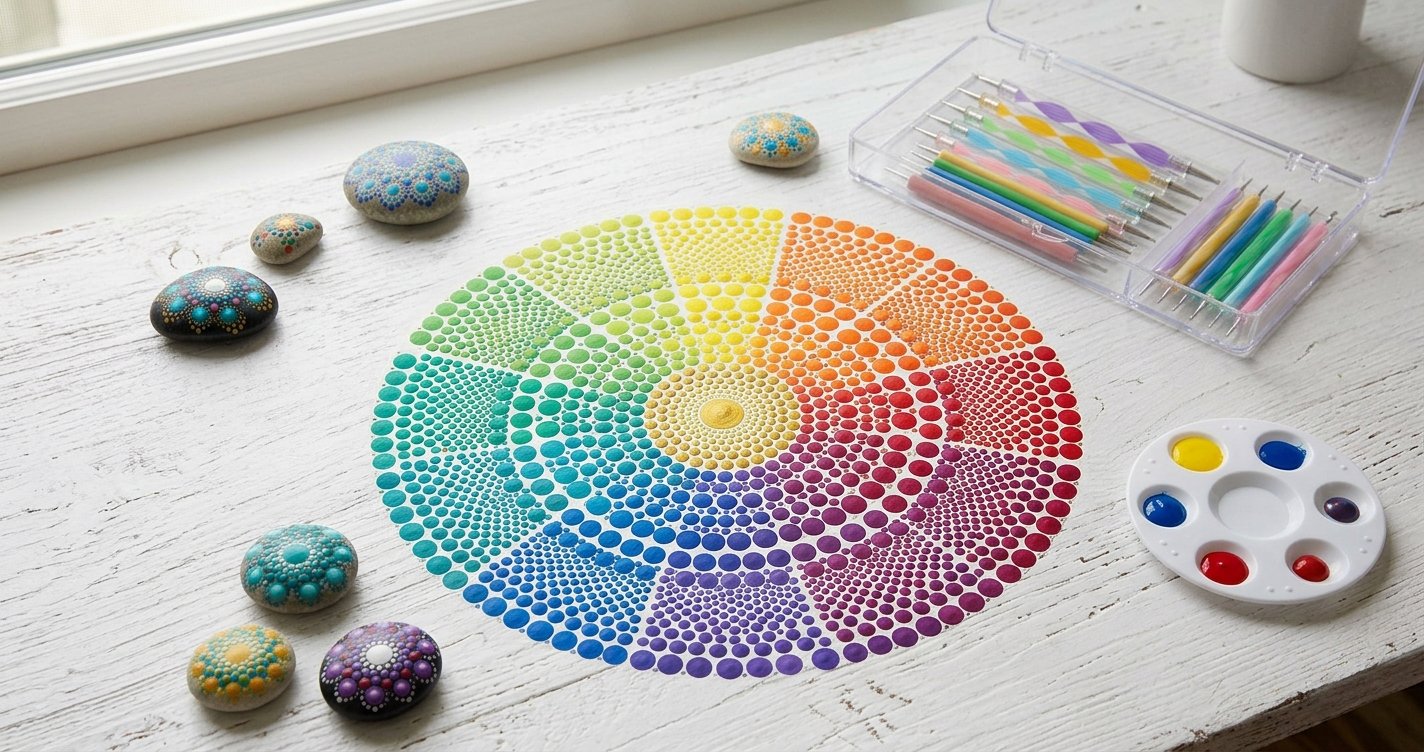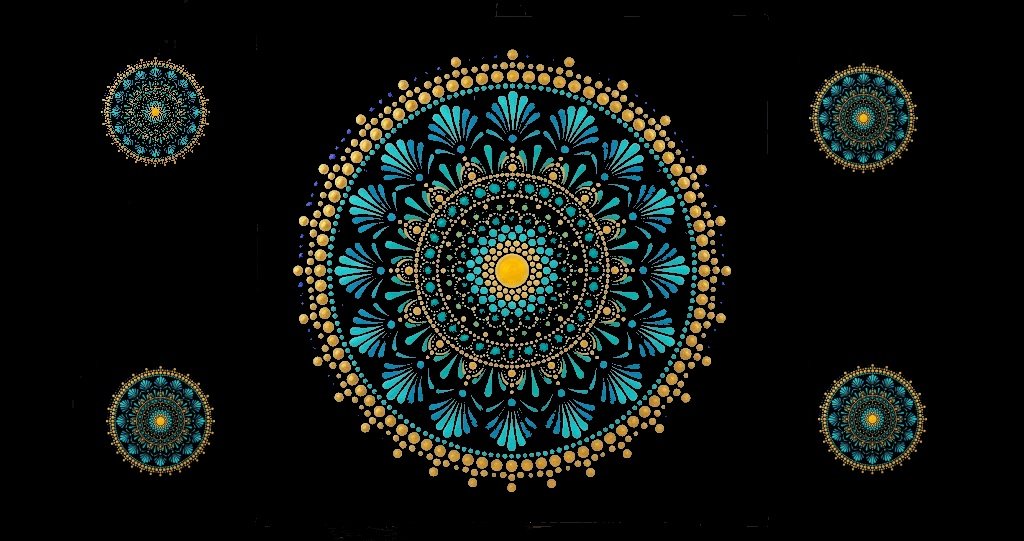


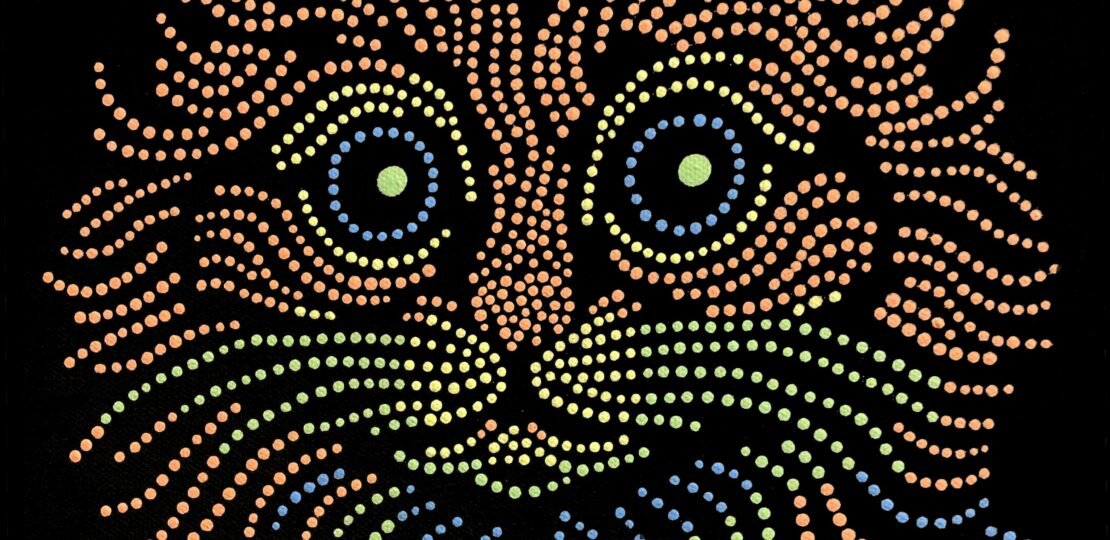
Dot art is a form of visual expression created entirely—or primarily—through the placement of individual dots. Rather than relying on continuous lines or traditional brushstrokes, the artist builds an image, pattern, or design one point at a time. From a distance, these countless small marks merge into shapes, gradients, and textures, while up close, each dot remains a distinct and deliberate act. At its core, this practice is defined by a technique of accumulation. A single dot carries little meaning on its own, but hundreds or thousands of them placed with intention form a cohesive whole. This gradual process mirrors the practice of mindfulness, as each small, present-moment mark builds toward a larger state of awareness over time.
One of the defining features of dot art is its versatility and accessibility across different mediums. It can be created using fine-tipped brushes, specialized dotting tools, cotton swabs, or even the back end of a paintbrush handle. Artists also use ballpoint pens, fine-liner markers, digital styluses, or natural materials like sand and stones. Because the barrier to entry is so low, nearly anyone can engage with dot art regardless of prior artistic training or budget constraints. The visual impact of the work comes down to precise control over three key elements: size, density, and spacing. Larger dots draw the eye to create emphasis, while smaller ones offer fine detail. Similarly, closely packed dots yield solid, dark areas, whereas sparse placement creates lightness and negative space. Furthermore, shifting from regular, grid-like spacing to irregular patterns allows the artist to move seamlessly between structured symmetry and organic flow.
While dot art has gained popularity as a modern craft trend, it is grounded in deep, ancient, and cross-cultural origins. Aboriginal Australian artists have used dot painting for tens of thousands of years to encode sacred stories and maps of the land. In the late 19th century, Pointillist painters like Georges Seurat introduced dot-based techniques to Western fine art, using optical color mixing to render luminous scenes. Additionally, Indian Rangoli art relies on foundational grids of dots to craft elaborate festival floor designs. This shared global lineage highlights how the repetitive, meditative quality of dot-making has long resonated with human beings across centuries. Ultimately, dot art is far more than just a finished product; it is deeply rooted in the journey of creation. The steady rhythm of placing dot after dot forms a natural container for focus, making it a uniquely powerful tool for mindfulness.
RELATED POSTS
View all